
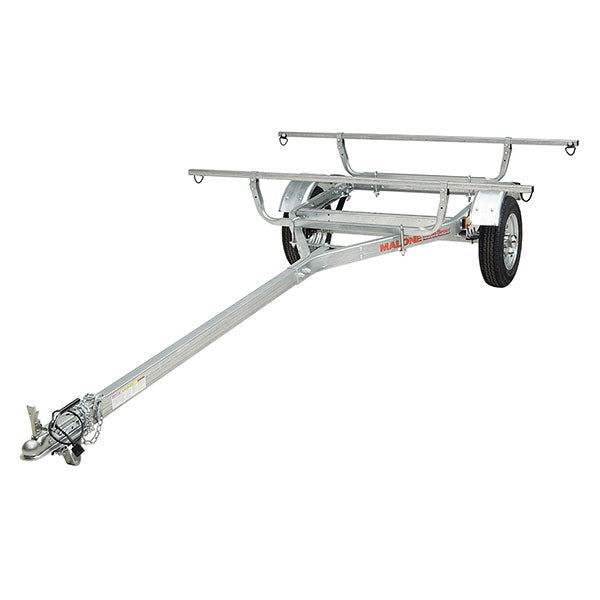
Malone MicroSport Trailer
✓#1 Authorized Malone Dealer
✓ Lowest Price Guaranteed
✓ FREE & FAST Shipping: In Stock & Ready to Ship
✓ Questions? Call a Malone Expert: 1-844-987-5777
✓#1 Authorized Malone Dealer
✓ Lowest Price Guaranteed
✓ FREE & FAST Shipping: In Stock & Ready to Ship
✓ Questions? Call a Malone Expert: 1-844-987-5777
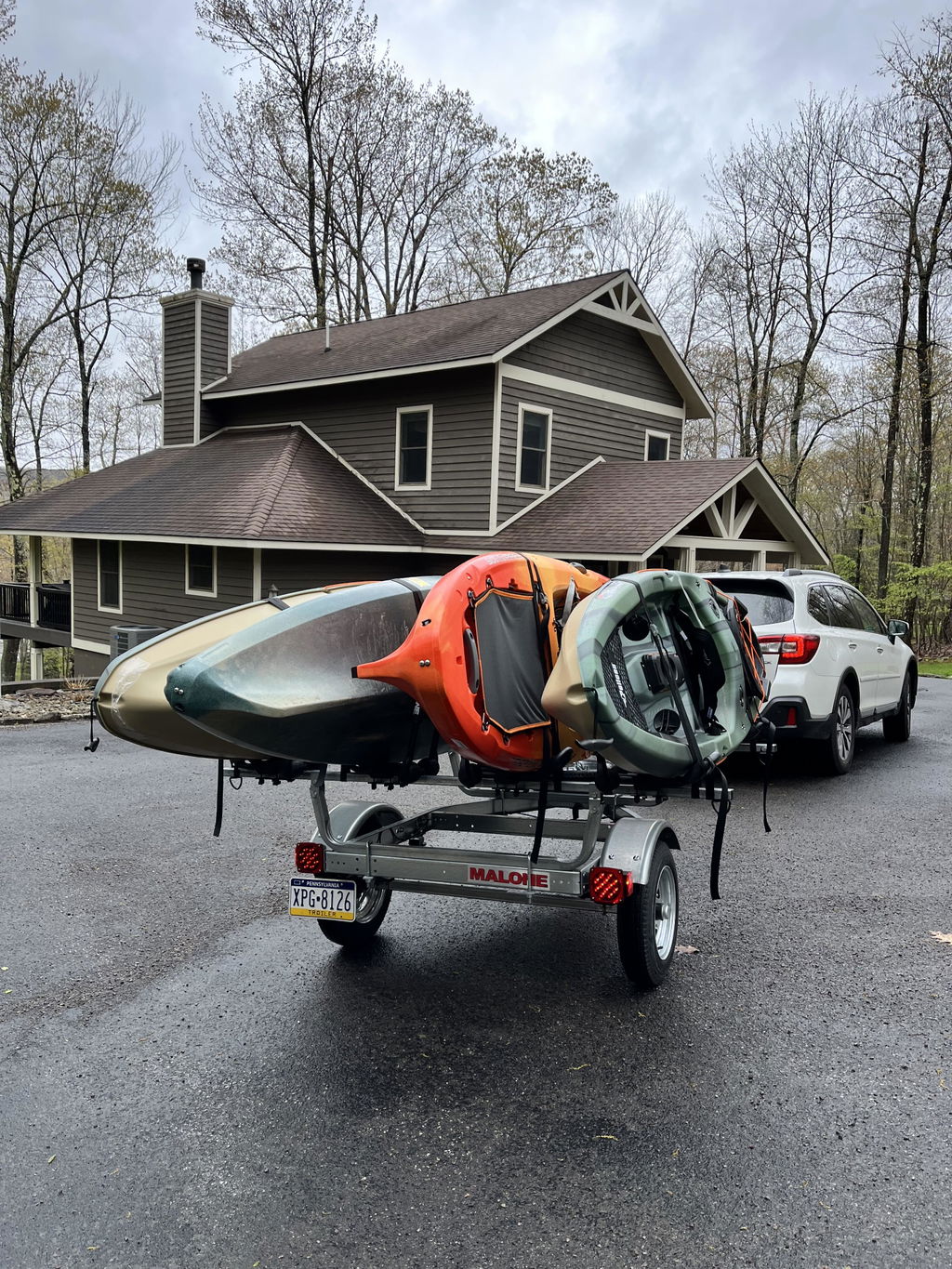
The MPG460G MicroSport™ trailer is the perfect combination of affordability, quality and design reliability.
Each kit includes: reinforced steel tongue, DOT approved LED submersible lighting, pre-wired electrical system, pre-fitted chassis components, 78"steel load bars and 12" galvanized slotted wheels. Assembles in approximately three to four hours with standard tools. Five Year Warranty. Made in the USA.
This is the bare chassis, supplied without kayak carriers. The kit covers two 12-inch wheels on marine-grade sealed bearings, the reinforced steel tongue, DOT-approved LED lighting, a pre-tested electrical system, pre-fitted chassis components, the 78-inch square steel load bars with D-ring tie-downs, and the instruction manual with registration paperwork.
It arrives as a multi-boxed item, typically four cartons. The MicroSport packages use this same frame with carriers and a spare tire already specified, so if you would rather not choose the carriers yourself, start there instead.
Both options tow identically and share the same chassis, capacity and load bars. What changes is the wheel and fender material. The galvanized option uses 12-inch galvanized slotted wheels with matching fenders; the aluminum option substitutes aluminum wheels and fenders.
Aluminum resists surface corrosion better and is easier to keep looking clean, which matters most if you launch in salt water. Neither option removes the need to rinse after salt exposure, and neither changes the trailer's capacity or towing behavior. If you are undecided, contact our team and we will talk through where you paddle.
No carriers are included with the base trailer. The 78-inch load bars take the standard Malone carrier styles — J-cradles, saddles, wing-style carriers, stackers and padded bunks — and the bar spread adjusts between 44 and 63 inches, which is what lets you set support points to suit a particular hull.
Each carrier has its own weight rating that sits inside the trailer's 800-pound total, never on top of it. Confirm the carrier suits your hull shape as well as its weight. You can browse trailer accessories, or tell us your boats and we will specify a set.
The trailer is rated for 800 pounds in total, covering up to a 20-foot canoe or kayak. That 800 pounds is the controlling limit for everything on the frame at once: boats, carriers, bunks, straps, storage and any gear you strap down.
It is not a per-boat allowance, and individual carrier ratings never add up to more than the trailer's total. Your tow vehicle and hitch impose their own limits, and the lowest applicable figure governs the trip. Unloaded tongue weight is 25 pounds; where you place the boats changes the loaded figure, so check it rather than assume it.
The trailer coupler requires a 2-inch-diameter hitch ball, and the top of that ball should sit 18 inches from the ground so the trailer tows level. That is the trailer's side of the connection. Lighting is a DOT-approved plug-and-play LED kit, so confirm your vehicle's connector matches or plan for an adapter.
Your vehicle needs a hitch with a receiver, a ball mount that fits that receiver, and a 2-inch ball fitted to the ball mount. A receiver does not take a ball directly, and receiver size is a separate matter from ball diameter — a 2-inch ball does not mean you need a 2-inch receiver. Hitch, receiver, ball mount, ball and tow vehicle must each be rated for the loaded trailer, and the lowest rating in that chain governs.
Yes. Assembly takes roughly three to four hours with standard tools, using the illustrated instructions supplied. The hubs arrive pre-assembled and the wiring is pre-tested, so neither of those has to be done from scratch.
The trailer ships as a multi-boxed item and the carton count and shipping method vary with configuration. Check the shipment against the supplied parts list before you start, keep the documentation envelope somewhere safe, and report anything missing or damaged to us promptly at sales@ecofishingshop.com.
Center the load over the axle and keep it even side to side. Too much weight behind the axle makes a trailer prone to sway; too much ahead of it overloads the hitch. Set the bar spread wide enough to support the hull properly rather than leaving the bars at whatever spacing they arrived in.
Strap boats at the carrier or bar contact points and use bow and stern lines for long hulls. Recheck straps after the first few miles and at each stop, and re-check tongue weight if you change how the trailer is loaded.
Run a pre-trip check every time: lights, coupler seated and pinned, safety chains crossed and attached, lug nuts tight, tire condition, and all straps snug. Service the wheel bearings on the schedule set out in the documentation supplied with your trailer, and rinse the frame, wheels and hardware with fresh water after launching in salt water or driving on salted roads. NHTSA tire safety guidance covers tire care generally.
Inflate to the Malone-recommended cold pressure for this trailer, 35 to 40 PSI, checked before towing while the tires are cold, and follow the trailer documentation and current manufacturer specification. A sidewall maximum is not the recommended operating pressure — read the sidewall for tire size, load range and maximum limits, not for the figure to inflate to.
Malone trailers carry a five-year limited warranty on defects in materials and workmanship for the original retail purchaser, subject to the written terms and exclusions. Normal wear, surface corrosion, accident damage, misuse, overloading and failures caused by not following the assembly instructions fall outside it, and no claim outcome can be promised in advance. Register with Malone within 30 days of purchase and keep your original receipt.
That warranty registration is a separate matter from titling, plating or inspecting the trailer for road use, which varies by state and province. Your state motor vehicle agency is the authority on what applies where you live.