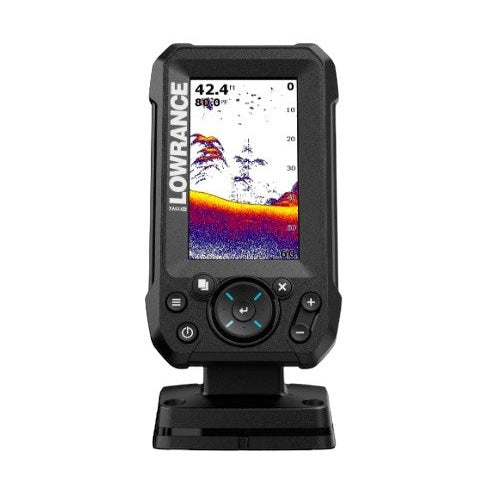
If you’ve spent any time fishing from a boat or kayak, you’ve probably used fish finders. Once considered a luxury, modern fish finders are now one of the most valuable tools on the water. They don’t just show fish, they help you understand what’s happening below the surface so you can make better decisions about where, when, and how to fish. Every angler knows that more information regarding fish and water behavior leads to more succesful trips on the water.
In this article, and Hooked! The Kayak Anglers Resource podcast, we’ll break down what fish finders do and explain three of the most important sonar technologies used today: Down Scan, Side Scan, and Forward-Facing Sonar. Let's skip the basics about what fish finders are and jump right into the terminology that is most confusing. If you're searching for a fish finder for your kayak, let's get a better understanding on what types there are and which is the best fit for you.
Fish Finders for Kayaks
Down Scan Sonar (Down Imaging)
Down scan sonar provides a highly detailed, photo-like view of what is directly beneath your boat. Unlike traditional 2D sonar, which shows fish as arches, down scan uses higher-frequency sound waves to create sharper images of structure and fish. You’ll see clearer outlines of rocks, timber, weeds, and fish holding close to cover. Think of down scan as looking straight down through a narrow window with excellent clarity.
What is down scan sonar best for?
Vertical Fishing
- Drop-shotting
- Vertical jigging
- Spoon fishing
- Ice fishing
Structure-focused Fishing
- Fishing ledges, humps, and drop-offs
- Rock piles and gravel bars
- Brush piles, timber, and stumps
Deep-water Fishing
- Offshore bass fishing
- Walleye on deep flats and breaks
- Lake trout or stripers in open water
Slow, Methodical Fishing
- Hovering over a waypoint
- Spot-lock fishing
- Precise boat positioning
Is down imagaing right for me?
Down imaging is best for anglers who fish vertically or target specific structure beneath the boat, especially in deeper water. It’s a precision tool—perfect for confirming what you’re fishing before you drop a lure.
Side Scan (Side View) Sonar
Side scan sonar displays detailed images of the underwater environment to both sides of your boat. Instead of only scanning below you, side scan sends sonar beams out wide—often 100 feet or more on each side—allowing you to quickly search large areas of water. It’s especially useful for finding structure without driving directly over it and potentially spooking fish.
What is side scan best used for?
Search Fishing & Covering Water
- Pre-fishing tournaments
- Exploring new lakes or unfamiliar water
- Finding productive areas quickly
Structure & Cover Hunting
- Brush piles and laydowns
- Standing timber and stumps
- Rock piles, boulders, and riprap
- Ditches, creek channels, and roadbeds
Offshore Fishing
- Ledges and drops
- Points and humps
- Saddles and underwater islands
Shallow Water Structure Fishing
- Flats with scattered cover
- Shoreline transitions
- Spawning areas with stumps or grass
Is side imaging right for me?
Side imaging is best for finding fish and structure efficiently across wide areas, especially offshore or in shallow flats with scattered cover. It helps you locate targets without disturbing fish, then switch to down imaging or 2D sonar to fish them precisely.
Forward-facing Sonar
Forward-facing sonar shows real-time images of fish and structure in front of your boat. This technology allows anglers to see fish swimming, reacting to lures, and changing depth instantly. Unlike traditional sonar, which shows history as your boat passes over an area, forward-facing sonar displays live movement, often up to 100 feet ahead.
What is Forward-facing Sonar Best Used For?
Targeting Individual Fish
- Suspended bass
- Schooling crappie
- Open-water stripers or walleye
Casting & "Video Game" Like Presentation
- Casting to suspended fish
- Watching fish follow or reject a lure
- Adjusting retrieve speed and depth in real time
Open Water Fishing
- Pelagic species with no bottom reference
- Bait balls and predator fish chasing them
- Mid-water column fish
Precise Presentations (Ice Fishing)
- Jerkbaits, swimbaits, and glide baits
- Vertical jigging while watching fish react
- Seeing how fish react to your baits and switching your presentations to entice a bite
- Drilling ice holes and scanning a wide area to find structure & the fish it may or may not hold in real time
Is forward-facing sonar right for me?
Forward-facing sonar is best for real-time, fish-by-fish targeting, especially in open water or around isolated structure. It’s the ultimate tool for precision anglers who want to see fish behavior and fine-tune presentations instantly. It is not especially usueful in shallow or water filled with weeds/debris.
Our Top Fish Finders
Shop all things Fish Finders to pair with your fishing kayak or boat. If you are considering a finder and need to pair it with a battery, shop our lithium battery collection. Be sure to check your finder's amperage draw and pair it with an appropriate sized battery.