Advanced Risk — Read This Section Carefully
Motoring a Fishing Kayak Upstream: Why It's Far More Dangerous Than You Think High Risk
Most kayak safety guides stop at the basics, like the ones I've written in the past. This one doesn't. If you're fishing rivers with a motorized kayak — and more anglers are doing exactly that — you need to understand a set of increased risks that don't exist when you're paddling downstream. Motoring against current on a river is one of the most demanding and deceptively dangerous things you can do in a fishing kayak. It has humbled experienced anglers. It has flipped kayaks in two feet of water. It has done both to me. Stick with me on this longer blog entry so you don't end up making the same mistakes I did in my second attempt to work upriver with a motor.
"Paddling downstream, the river is mostly your ally. Motoring upstream, it is entirely your opponent — and it fights dirty."
The Four Compounding Dangers of Upstream Motor Navigation
-
Sudden Current Changes Strip Your Control at the Worst Moment
Rivers are not uniform. Flow rates change constantly — around bends, behind structure, through narrow chutes, as gradient increases. When you're motoring upstream and hit a sudden increase in current speed, your forward progress slows sharply or stops altogether. At that moment, you need more throttle and more steering input simultaneously. If you hesitate, the bow begins to swing. Once it swings more than 30–40 degrees off the upstream line, recovery is extremely difficult. The current that was pushing against your bow is now pushing against your entire hull — and a broadside kayak in moving water is a capsizing kayak.
-
Sharp Turns Against Current Can Flip You in the Blink of an Eye
Turning while moving downstream means the current helps swing your bow through the arc. Turning while fighting upstream current means the current is working against every degree of that turn. If you need to redirect quickly — to avoid an obstacle, to find a better line, or because the current forces you — and you turn sharply, you expose your hull to lateral current pressure. The kayak tilts toward the downstream side. Without an immediate brace or weight shift, that's a capsize. Wider, flat-bottomed fishing kayaks are especially vulnerable here because their high primary stability means they resist the lean right up until they don't.
-
You Will Walk Your Kayak Through Rapids and Riffles — And That's Its Own Hazard
No motor, regardless of your thrust number, gets you through every section of river. Shallow riffles, rocky rapids, and fast water will require you to get out and guide or drag your kayak through sections too shallow and fast for your motor. This should be expected and not overlooked. What catches anglers off guard is how physically demanding it is, how quickly rocks move underfoot, and how hard you work while in moving water. A slip while dragging a heavy motorized kayak upstream can mean losing hold of the boat or going underwater in fast, shallow current.
-
Re-Entry After a Portage Is the Single Highest-Risk Moment of Any River Motor Trip
This is where I flipped mine. After you've portaged through the shallow, fast section, you reach the head of the rapid or the calm pool above it. You need to get back into the kayak, stabilize, and hit the throttle hard enough to move upstream before the current carries you back through the section you just walked. That window is narrow. You are climbing into an unstable platform, in or near moving water, while physically tired, while the kayak is drifting. Your actions are sped up and all it takes is turning your rudder too sharply while throttling up against the current. The video below shows exactly how fast it happens.
⚠ The Re-Entry Window Is Short and Unforgiving
After portaging through fast water, you have a very limited amount of time to remount and throttle up before you drift back into the section you just walked. Do not rush the re-entry to beat the drift. A controlled, stable re-entry followed by a missed window is recoverable. An unstable re-entry at speed is not. When in doubt, walk it twice.
Watch: How I Flipped My Motorized Kayak Re-Entering After a Portage
I made every mistake listed above in a single upstream run. The water was shallow, the current was manageable — or so I thought. Watch what happens when the re-entry window closes faster than expected and I go for the throttle and turn the rudder in the wrong direction before I was properly seated and ready. My brain moved faster than my actions and I wasn't properly experienced or prepared.
Best Practices
Safer Practices for Upstream Motor Navigation
The goal is not to avoid using a motor on rivers — it's to use one with a realistic understanding of what it demands. These practices reduce risk significantly.
| Safer Approach | Common High-Risk Error |
|---|
| +Scout difficult sections from shore before committing |
−Reading current only from the cockpit while moving |
| +Portage/drag any rapid you're not certain you can power through |
−Attempting technical water with insufficient motor thrust |
| +Full stop and full stabilize before throttling out of a portage |
−Throttling up mid-entry to beat the drift |
| +Keep your breakdown paddle within one-arm reach at all times |
−Paddle stored away when motor is running |
| +Slow, gradual turns with steering corrections — never sharp pivots |
−Hard steering input against strong current |
| +Accept the second portage if the first re-entry window closes |
−Rushing re-entry to avoid losing ground |
The Two-Second Rule for Re-Entry
Before you touch the throttle after climbing back in, count two full seconds. Are both hands on the kayak or paddle? Are you seated and balanced? Is your PFD still secure? Two seconds costs you ten feet of drift. It could save your gear, your motor, and your season.
General River Safety Guide
What Every River Angler Should Know Before They Launch
Rivers are some of the most rewarding places to fish from a kayak — and some of the most unforgiving. Moving water doesn't care about your experience level, your gear, or your confidence. Below we cover the fundamentals every river angler needs: stability, paddling technique, and the essential safety kit that should be on every trip.
Whether you're floating a lazy river for bass or fighting current on a shallow and fast trout stream, the principles here apply. Read it before your next launch.
Foundation
Stability on Moving Water
Stability in a river kayak is not a single trait or quality — it's a relationship between the kayak, your body, and the water moving beneath you. Still-water stability means far less the moment you enter current. Understanding the two types of kayak stability is the first step.
Primary Stability
Primary stability is how steady the hull feels when the water is flat and you're sitting upright (or standing). Wide, flat-bottomed fishing kayaks score high here — they feel planted on calm water, which makes them popular for gear-heavy stand-up kayak anglers. On a river, this can work against you. A hull with high primary stability resists small tilts, but when a current edge or submerged rock forces a lean past its comfort zone, it can tip quickly with little warning.
Secondary Stability
Secondary stability is the hull's ability to hold a lean before capsizing — how much it "catches" you at an angle. Many touring and river-specific hulls with a rounded or V-shaped bottom have lower primary stability but excellent secondary stability. On moving water, the ability to edge intentionally and recover is often more valuable than initial flatness. Because you are less likely to stand while moving in current, river anglers should prioritize secondary stability over primary.
For river fishing specifically, look for a kayak with enough secondary stability to handle being pushed by current, crossing eddylines, and bracing during unexpected impacts. Keep your center of gravity low — gear on the deck, not piled in your lap — and practice leaning into current rather than fighting it.
Stability Practice
Before your first river trip on any new kayak, practice wet exits, bracing strokes, and re-entry in calm water. Know exactly how your hull behaves under stress before current and the need for quick reactions are added to the equation. Decision-making under stress impacts reaction time.
Relative Capsizing Risk by River Scenario
Calm float, paddling downstream
Low
Crossing an eddyline (the boundary between still eddy water and moving current)
Mod
Paddling upstream, moderate current
Mod
Motoring upstream, steady current
High
Motoring upstream, sudden current surge
High
Re-entry after portage, drifting back to fast water
Very High
Relative risk ratings based on current research and field experience. Actual risk depends on river conditions, kayak model, and angler skill level.
Technique
Paddling Technique for River Fishing
Proper paddle technique isn't just about efficiency — on a river, it's directly tied to safety. A bad stroke at the wrong moment can send you broadside into current, and broadside in current is where kayaks flip.
Blade Angle and Torso Rotation
Power comes from your torso, not your arms. Plant the blade fully before you pull, rotate from the hips, and exit the stroke before it passes your hip. Arms that extend the stroke past the body cause the paddle to push sideways rather than forward — and on a river, any lateral force matters.
The Low Brace
The low brace is your primary recovery stroke on moving water. When you feel the kayak leaning unexpectedly, slap the back face of the paddle blade flat on the water surface and press down while leveling your hips. Practice this until it's reflexive. A clean low brace has saved more river kayakers from a swim than any other single skill.
Ferrying and Eddy Turns
To cross current without being swept downstream, ferry angle your bow 30–45° upstream and paddle forward — the current does the lateral work. To enter an eddy, aim your bow across the eddyline aggressively and lean into the turn (toward the eddy center). Hesitation on the eddyline is what causes the capsize, not the current itself.
Reading Water First, Fishing Second
River anglers often get caught focusing on the fishing and stop reading the water. Before every cast, establish your position. Know what's downstream. If you get too focused on a strike and drift into a fast chute, you'll be fighting current instead of fish.
River Rule: Eyes Downstream First
Every time you stop paddling to make a cast, take two seconds to look downstream and identify your next hazard or eddy. Know your exit before your line is in the water.
Essential Equipment
Safety Equipment Every Kayak Angler Needs
These four items are non-negotiable when on the water. They are not optional on easy days. They are not for the back of your vehicle. They go on your body and in your kayak, every single time.
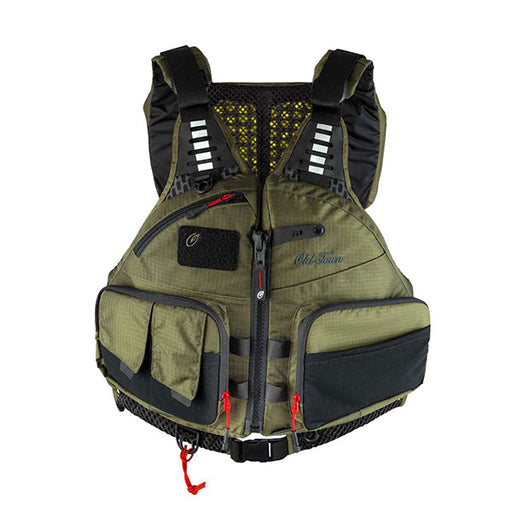
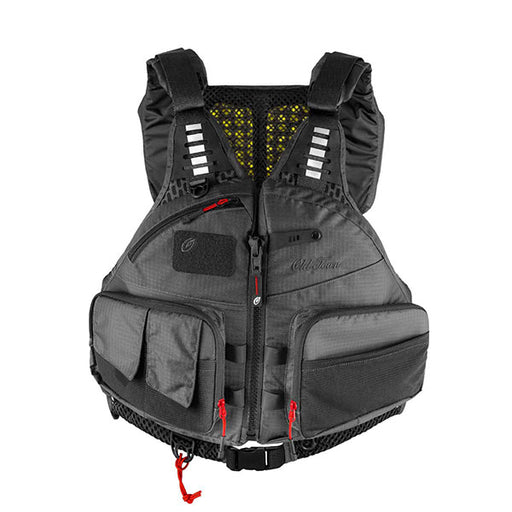
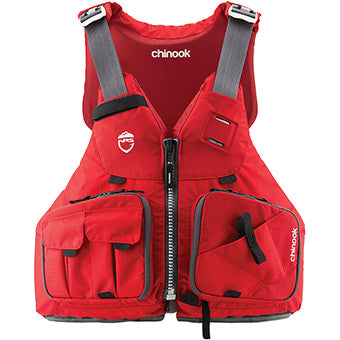
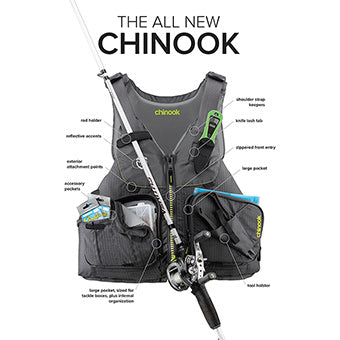
Wear it — don't just carry it. A Type III or Type V PFD designed for paddlers gives you freedom of movement and keeps you afloat if you swim. In cold water, you may have less than a minute before your muscles stop working. A PFD that's clipped to the stern is useless.
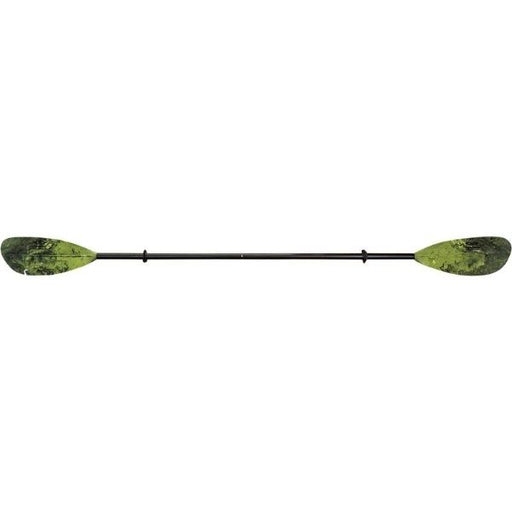
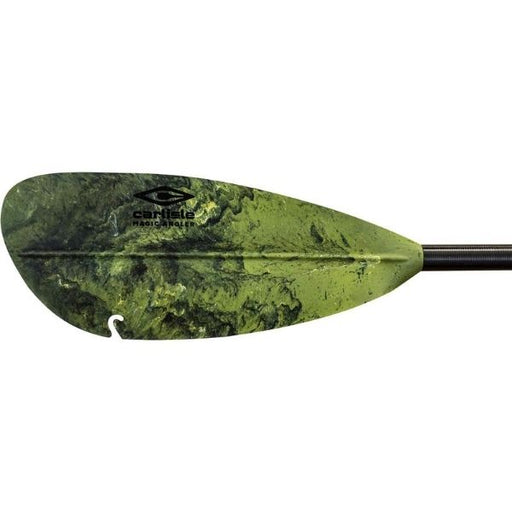
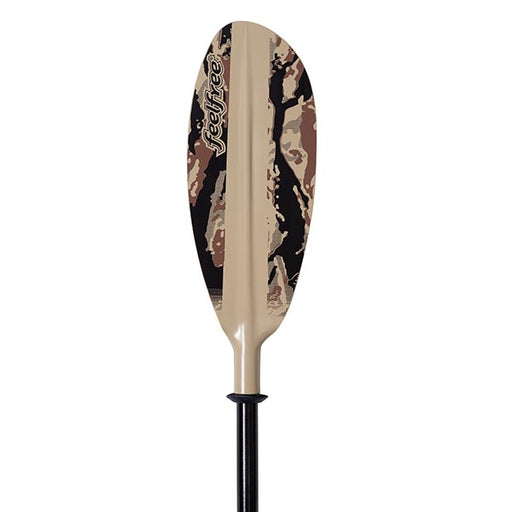
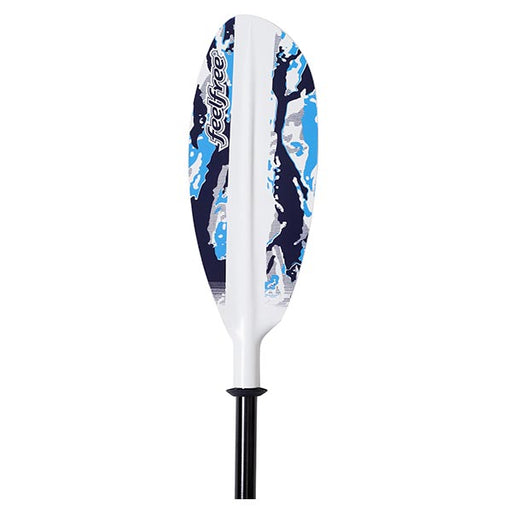
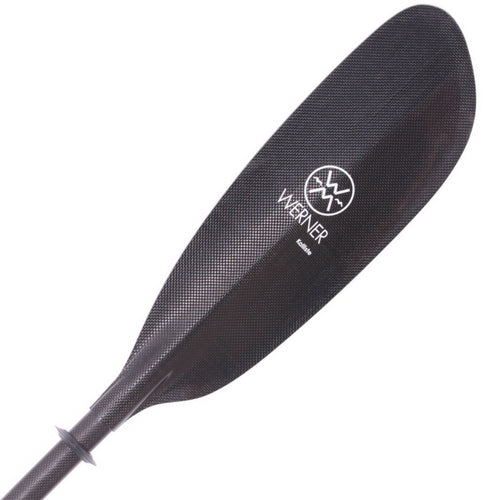
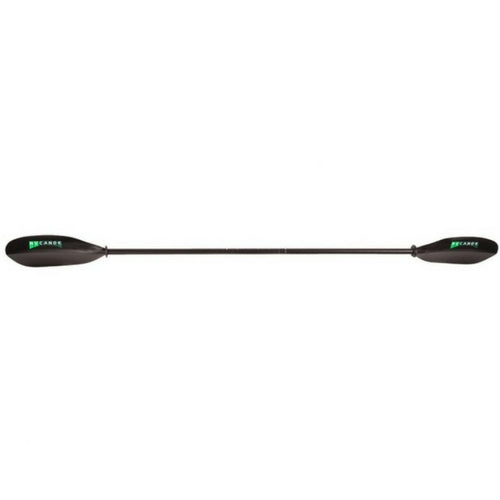
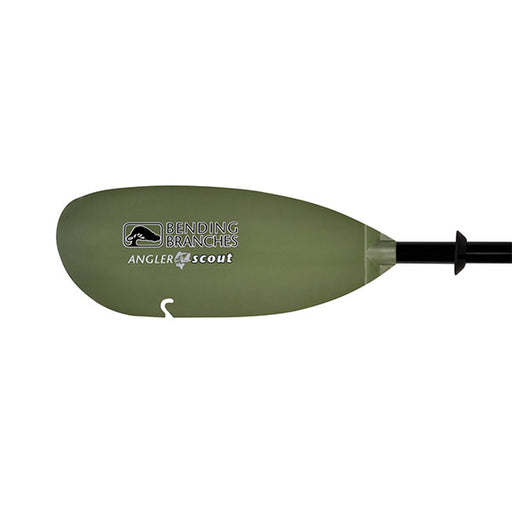
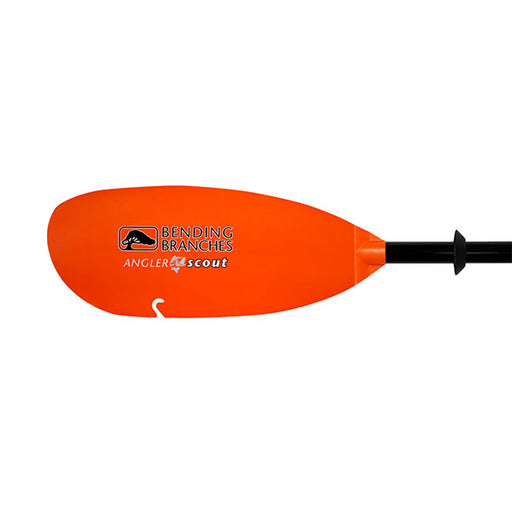
Even if you're running a motor, a breakdown paddle must be on the kayak and within reach. On a river, a dead motor means you're in current without propulsion. A leash keeps your paddle accessible if you swim. Match paddle length to your kayak width and your own height for efficient, safe strokes.
Pack a complete change of clothes and an insulating layer even in summer. Cold water shock is a year-round risk on most rivers. Wet cotton in a breeze causes hypothermia faster than you expect. Your phone and emergency contacts go in the dry bag too.
Whistle
A pea-less emergency whistle clipped to your PFD is a Coast Guard-required signaling device and your fastest way to call for help. Three blasts is a universal distress signal. Your voice carries 50 yards — a whistle carries 500. Don't skip this because it seems minor.
Tether & Strap Everything
Approach every river trip as if you WILL tip. Strap everything down — batteries, gear boxes, fishing poles, and anything else you want to stay put. Tether everything else: phones, tools, cameras, and any other loose gear that could spill out if you were to tip. I made this mistake on my first flip and I will not make it again moving forward.
| Bring Every Trip | Common Mistakes to Avoid |
|---|
| +PFD worn on body |
−PFD stored in hull or on stern |
| +Breakdown paddle secured and reachable |
−Relying solely on motor with no backup |
| +Dry bag with full change of clothes |
−Cotton base layers only |
| +Whistle clipped to PFD |
−Whistle in tackle box or dry bag |
| +Charged phone in waterproof case |
−Phone loose in cockpit or in pants pocket |
| +Tell someone your float plan |
−Solo trip with no check-in plan |
Frequently Asked Questions
River Kayak Safety — Common Questions
What is the most important safety item for river kayak fishing?
A properly fitted PFD worn on your body is the single most important piece of gear. It should be on every time you're on moving water — not stored in the hull, not clipped to the stern, not waiting for the "sketchy section." Capsizes happen without warning, and in cold or fast water, you may not have time to put it on after the fact.
Is it safe to use a motor on a fishing kayak in a river?
Yes — with the right preparation and a clear-eyed understanding of the risks. Motoring downstream on calm to moderate river sections is manageable for experienced anglers. Motoring upstream against current introduces a significantly higher level of complexity and capsizing risk, particularly during re-entry after portaging shallow sections and when navigating sudden changes in current speed.
Why is going against the current in a motorized kayak more dangerous?
When you're motoring upstream, any increase in current speed reduces your forward progress and demands more boat control at the same time. Sudden changes in flow rate can stop your upstream progress almost instantly, leaving you fighting the current with less momentum to steer. Sharp turns against flow expose your hull to lateral current, which is a primary capsize mechanism. And the re-entry process after portaging shallow sections — climbing back into a drifting kayak while rushing to throttle upstream — is one of the highest-risk moments in river kayak fishing.
What should I pack in a dry bag for river kayak fishing?
At minimum: a full change of clothes, an extra insulating layer, a basic first aid kit, your charged phone in a waterproof case, emergency contact information, and any necessary medications. Also consider a small emergency bivy or space blanket on longer float trips. Assume you will get wet — the dry bag is your contingency plan, not your optimistic one.
When should I portage rapids instead of motoring through?
Portage any time the water is too shallow for your prop to run cleanly, when rocks are exposed or close to the surface, when you can't see the bottom of the rapid from upstream, or when you have any doubt. Attempting to power through a riffle that beats you halfway through leaves you in a worse position than portaging from the start — you're in fast shallow water, your motor may have hit a rock, and the current is pushing you back through the same section. Scout, decide from shore, and portage early.
The River Demands Respect — Give It Every Time
A motorized fishing kayak on a river can be one of the best fishing kayak experiences available today. It gives you access to water you'd never reach by foot and allows you to avoid organizing shuttle services or enlisting friends to pick you up. But, it demands that you understand current, know your hull, carry the right gear, and respect the moments where the river holds all the power — especially when you're climbing back in after a portage, tired, wet, and watching the current start to pull you back toward the fast water you just walked.
River safety is ALWAYS the first priority. Keep your PFD on, the paddle close, and the throttle hand patient.